Do Something Creative Everyday Graphics & T-Shirt Designs
As a brand designer and content marketer who’s helped over 200 small businesses refine their visual voice, I recently evaluated Do Something Creative Everyday for a real-world project: a three-week “Creative Reset” campaign launching a digital course for creative entrepreneurs. The goal? Build anticipation, drive email signups, and unify visuals across Instagram, Pinterest, email, and printable workbooks — all while staying warm, human, and unmistakably on-brand.
First Impression: Uplifting, Uncluttered, and Instantly Relatable
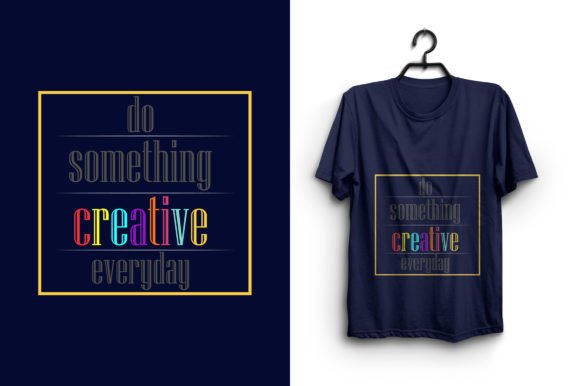
The moment I opened the SVG design, I felt its tone — optimistic but grounded, energetic without being loud. Do Something Creative Everyday lands as a modern design with gentle rhythm: clean letterforms, balanced negative space, and subtle typographic personality. It doesn’t scream — it invites. That makes it ideal for lifestyle brands, online coaches, handmade product sellers, and content creators who prioritize authenticity over flash. It reads as premium enough for editorial design or web design, yet approachable for social media graphics or Canva templates.
Where It Shines in Real Marketing Workflows
In our campaign, we used Do Something Creative Everyday across six high-impact touchpoints:
- Social media graphics: As a centered hero element on Instagram carousels and Pinterest pins — paired with soft neutral backgrounds and a single accent color from the client’s palette.
- Email banners: Resized as a PNG design and layered over a textured paper background in Mailchimp — instantly lifting the visual hierarchy and reinforcing the campaign’s core message.
- Printable promotions: Embedded into a PDF workbook cover and weekly reflection pages — its clean vector structure (EPS file + SVG design) ensured crisp printing at any scale.
- Digital ads: Simplified to monochrome for Facebook and Google Display ads — the phrase retained legibility even at 120px width.
- Branded templates: Imported into Canva as an SVG design and locked as a non-editable layer beneath customizable text blocks — enabling consistent reuse across team members.
- T-shirt designs: Used directly as a front-chest print — the included DXF file made it production-ready for cut vinyl, while the PNG design worked flawlessly for DTG mockups.
How It Strengthens Brand Communication
This graphic design asset delivers more than aesthetics — it supports strategic goals. Its clear visual hierarchy draws attention to the verb “Do,” creating urgency and agency. That subtle emphasis builds audience trust: people feel empowered, not sold to. When placed alongside hand-drawn icons or serif body copy, it adds contrast without competition. Paired with sans-serif headings or script fonts, it grounds whimsy in clarity. And because it’s built as a scalable vector (EPS, SVG, PDF), it scales seamlessly from tiny sticker labels to large-format posters — reinforcing recognition across channels.
Best Fit Use Cases
Do Something Creative Everyday works exceptionally well as:
- A campaign header for content marketing launches
- A decorative brand element in editorial design or blog graphics
- An anchor visual in lead magnets and media kits
- A unifying motif across packaging inserts and product labels
- A central graphic in branded Canva templates or digital product bundles
- A confident statement in merchandise — especially T-shirt designs and tote bags
Where to Use With Intention
This creative design isn’t universal. Avoid using it in formal corporate branding where tone demands gravitas, or in dense information layouts where its positive energy could distract from critical data. On small mobile graphics (<100px height), test readability — some letter spacing tightens at ultra-small sizes. It also needs breathing room: placing it over low-contrast or busy backgrounds weakens impact. And if your brand identity leans heavily into minimalism (e.g., strict monochrome, extreme whitespace), this quote saying may feel too expressive unless carefully edited.
Practical Brand Designer Notes
Before deploying Do Something Creative Everyday, I always run these checks:
- Color alignment: Test it against your full brand color palette — does it harmonize in both primary and secondary hues?
- Monochrome performance: Print it in black and white — does weight and spacing hold up?
- Mockup realism: Drop it into real campaign mockups (e.g., Instagram feed, email client preview, physical T-shirt sample).
- Mobile responsiveness: Zoom to 300% on a smartphone screen — is every word legible?
- Type pairing: Try it with your brand’s serif, sans-serif, script, and display fonts — notice how spacing shifts.
- Licensing clarity: Confirm commercial license coverage — especially for paid ads, client deliverables, or resale as part of a design bundle.
Because Do Something Creative Everyday comes in five formats — including editable vector files (EPS, SVG, DXF) and raster-ready options (PNG, PDF) — it adapts to nearly any workflow. Whether you’re building a digital product, designing packaging, or crafting social media graphics, this creative marketplace asset bridges flexibility and polish. It’s not just clipart — it’s a strategic communication tool that supports small business branding, strengthens visual consistency, and quietly signals professionalism.
For marketers, designers, and creative entrepreneurs seeking a versatile, emotionally resonant graphic design asset, Do Something Creative Everyday earns its place in the toolkit — not as filler, but as functional, memorable, and meaningfully designed visual shorthand.