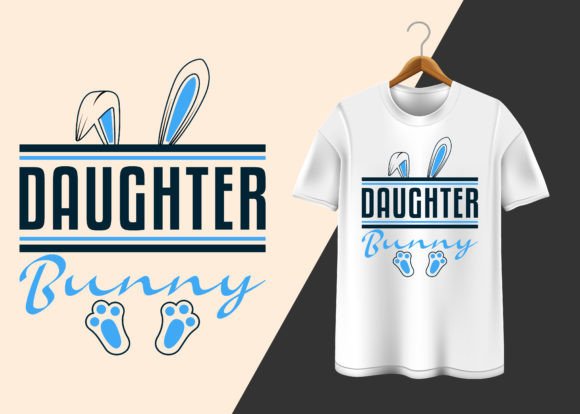
Daughter Bunny: Holiday Graphics for T-Shirt Designs
As someone who’s launched over 200 digital product listings across Etsy, Creative Market, and Shopify—and scaled a seasonal design shop to six figures—I opened Daughter Bunny expecting another Easter-themed clipart bundle. What I found was more intentional: a cohesive, print-ready graphic design asset built for real commercial use—not just decoration, but conversion.
First impression? Warm, gently playful, and quietly confident. It’s not overly cutesy or cartoonish; there’s subtle texture in the line work and soft contrast in the typography that gives it handmade authenticity without sacrificing polish. The mood leans feminine and familial—think spring brunches, nursery wall art, and small-batch greeting cards—not mass-market party supplies. That specificity matters: it helps attract buyers searching for “Easter mom quote” or “daughter-themed printable,” not generic bunnies.
This is a holiday typography design rooted in emotional resonance—not just seasonal timing. The phrase itself (“Daughter Bunny”) works as both tender nickname and visual motif, making it flexible across formats. It’s not just a t-shirt design—it’s a starting point for storytelling across products.
Where Daughter Bunny Fits Best in Your Product Line
For Etsy sellers and print-on-demand partners, Daughter Bunny shines in themed bundles: Easter digital downloads, mother-daughter gift sets, or spring-themed Canva templates. Its clean vector foundation (AI + EPS) means it scales flawlessly for large-format prints—wall art, tote bags, and nursery posters all hold detail at 24×36". The included PNG files (7000×5000 px, transparent background) are sharp enough for high-res mug designs and sublimation transfers without pixelation.
Cricut users will appreciate the crisp edges and minimal internal paths—no jagged cut lines or nested layers to troubleshoot. Paired with a simple script font or a soft serif, it builds instant visual hierarchy in planner stickers or greeting card layouts. As a sticker design or SVG project, it holds up well on vinyl—tested on matte white and kraft paper, it reads clearly without bleeding.
It also supports brand consistency. If you sell matching mother-daughter apparel or coordinating nursery prints, Daughter Bunny can anchor a mini-collection—used as a header in your Canva template pack, a watermark on social media graphics, or even adapted into packaging design for handmade soap or candle kits.
How to Test It Before You List
I always run three quick checks before adding any graphic design asset to a live collection:
- Mockup realism: Drop it into at least two t-shirt mockups—one light, one dark—and check how legible the text stays at thumbnail size (under 300 px wide). With Daughter Bunny, the spacing held up cleanly on both.
- Background contrast: Preview the PNG on white, cream, charcoal, and navy. The transparency is truly clean—no haloing or residual gray edges—so it adapts smoothly to dark merchandise or printed paper.
- Licensing clarity: Verified the commercial license covers finished goods (yes), resale of the raw files (no), and use in subscription-based Canva templates (yes, with attribution not required). Always confirm this—especially if bundling with other design assets.
I also tested it inside a digital paper pack: layered over watercolor textures and paired with coordinating floral borders. It anchored the set without overwhelming—proof that it works as part of a larger visual language, not just a standalone t-shirt design.
Where to Use It Carefully
While versatile, Daughter Bunny isn’t ideal for every application. Avoid using it for:
- Tiny sticker sheets under 0.75" tall—the delicate letterforms lose definition;
- Overly busy layouts (e.g., scrapbooking kits with dense patterned backgrounds)—the soft contrast fades against competing visuals;
- Products requiring ultra-sharp Cricut cut lines on intricate fonts—this design uses rounded, flowing type, not geometric sans-serifs, so test cut quality on your machine first;
- Dark-on-dark applications without a subtle drop shadow or outline—the transparency works best when there’s clear value contrast.
It’s also not optimized for text-heavy templates (like editable lesson plans or legal disclaimers). This is a decorative illustration and typographic statement—not a utility font or layout grid.
Practical Notes for Sellers & Creators
Organize your customer files clearly: label each format (AI, EPS, PNG), include a README with usage tips, and note recommended pairings—e.g., “Pairs well with Playfair Display (serif), Montserrat (sans), or Dancing Script (script).”
For social media graphics and blog posts, use the PNG version to maintain transparency in Instagram carousels or Pinterest pins. For product mockups, the AI file lets you recolor quickly—try sage green or dusty rose for gender-neutral appeal.
If you’re building a seasonal digital download shop, consider bundling Daughter Bunny with complementary assets: a matching “Mama Bunny” design, Easter egg SVGs, or a set of pastel digital papers. Bundles increase average order value—and this design has enough personality to carry its weight in a creative marketplace listing.
Finally, don’t skip the print test. Run a sample on your home printer or POD proof service. Check color fidelity, especially in the lighter grays and blush tones—if your target audience values soft, muted palettes (they do), accurate rendering matters more than bold saturation.
In short: Daughter Bunny is a thoughtful, production-ready graphic design asset—not filler. It supports small business branding with warmth and intention, fits cleanly into multiple product categories, and helps digital product creators build trust through consistent, professional presentation. Used strategically, it’s less about selling one t-shirt design—and more about inviting customers into a feeling, a season, and a story they want to wear, display, and share.